
Bird extinction is now being observed all over the world. The main reason is the loss of natural food resources as a result of destructive human activity. Birds are genuinely dying from starvation. People cut down forests, kill wild animals, and practice extensive industrial-scale agriculture by spraying toxic chemicals. Then, along the chain, all inhabitants of the wild die as well.
In France, according to scientists, from 1989 to 2019 the number of all birds declined by at least 30%; in Britain by 29% (with farmland species down by 60%); and, for example, in North America since 1970 more than 3 billion birds have disappeared, which also amounts to around a 30% loss of all bird populations.
These are catastrophic figures! Literally: minus 30% of all birds in just a few decades. And the extinction is accelerating — people have now started “developing” the last untouched areas of wilderness as well — protected reserves — brazenly invading even the most secluded refugia, the last shelters.
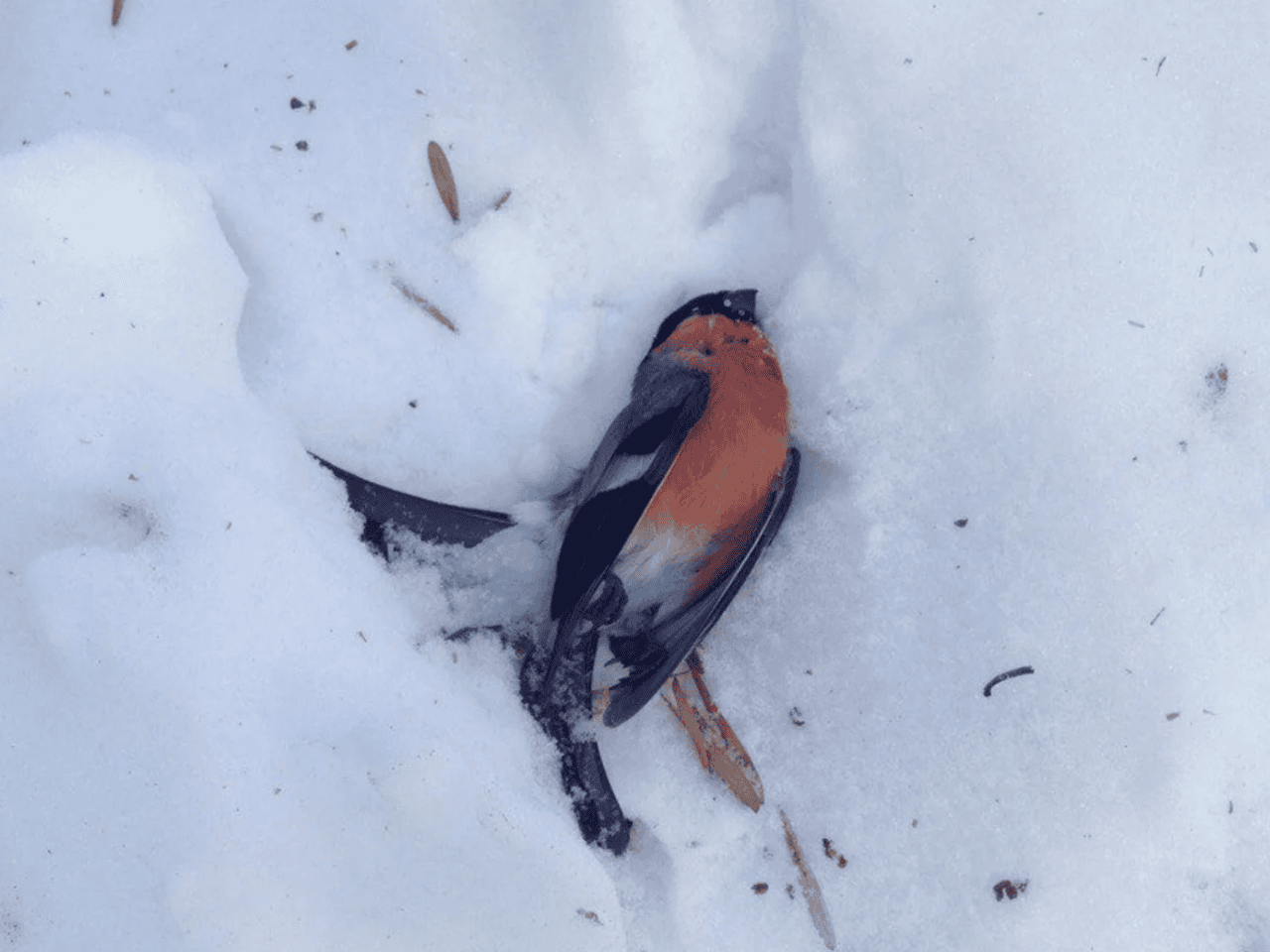
So, it is especially hard for birds to survive during harsh, frosty winters — a colossal number die due to lack of food and warmth. Short daylight hours and cold force small birds to feed almost continuously — in severe морозы some species are compelled to forage during 100% of their waking time. I have read good data from scientists around the world: they say that if many small birds fail to find food for a day or two, death is practically guaranteed. The body starts to give out.
The main winter diet of birds is insects and seeds (especially berries), but frosts sharply reduce insect numbers, and there are fewer and fewer seeds because of overall ecosystem degradation. In addition, in recent years there has been the phenomenon of a “false autumn,” when, due to abnormal heat, forest crops simply do not have time to ripen! The sun scorches everything; water disappears.
Small birds also lower their nighttime body temperature by a few degrees to save energy, which reduces resistance to disease and makes them vulnerable to hunger. Snow and ice block access to seeds and berries on the ground, so natural food resources often are not enough for everyone.
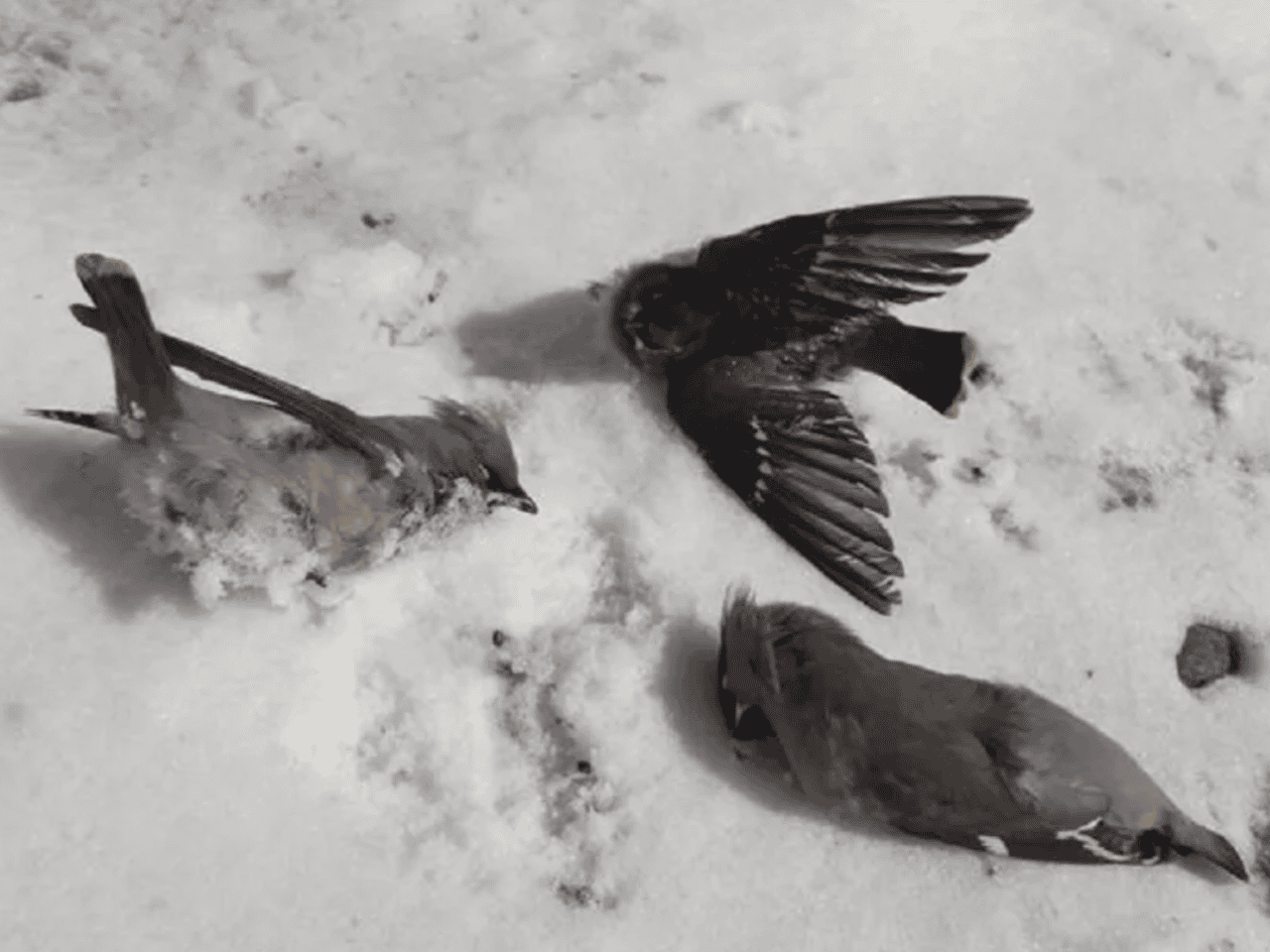
A few years ago I studied a scientific paper by Brittingham and Temple. In 1988 they conducted an experiment observing a population of the black-capped chickadee (Parus atricapillus). The experiment showed that without supplementary feeding only about 37% of the birds survived the winter, but with human support 69% managed to live until spring. That is, feeding increased survival by ALMOST TWICE!
Note that the experiment was conducted several decades ago. Today the situation has worsened: species chains are disrupted and almost all terrestrial ecosystems on the planet have been destroyed by humans! Let me remind you that the overall decline of all animal species on the planet is about 73% since 1970. We are now talking about protecting the last 27% of animals that are still alive at all.
So, even by 1988 scientists, through a practical experiment, proved that winter survival of birds doubles if they receive minimal support.
Similar results have been obtained for other species: in Norway only about half of young willow tits (Poecile montanus) survived until the next spring. In remote wilderness, most small songbirds (thrushes, grouse, buntings, etc.) during prolonged frosts either die or migrate hundreds of kilometers in search of food.
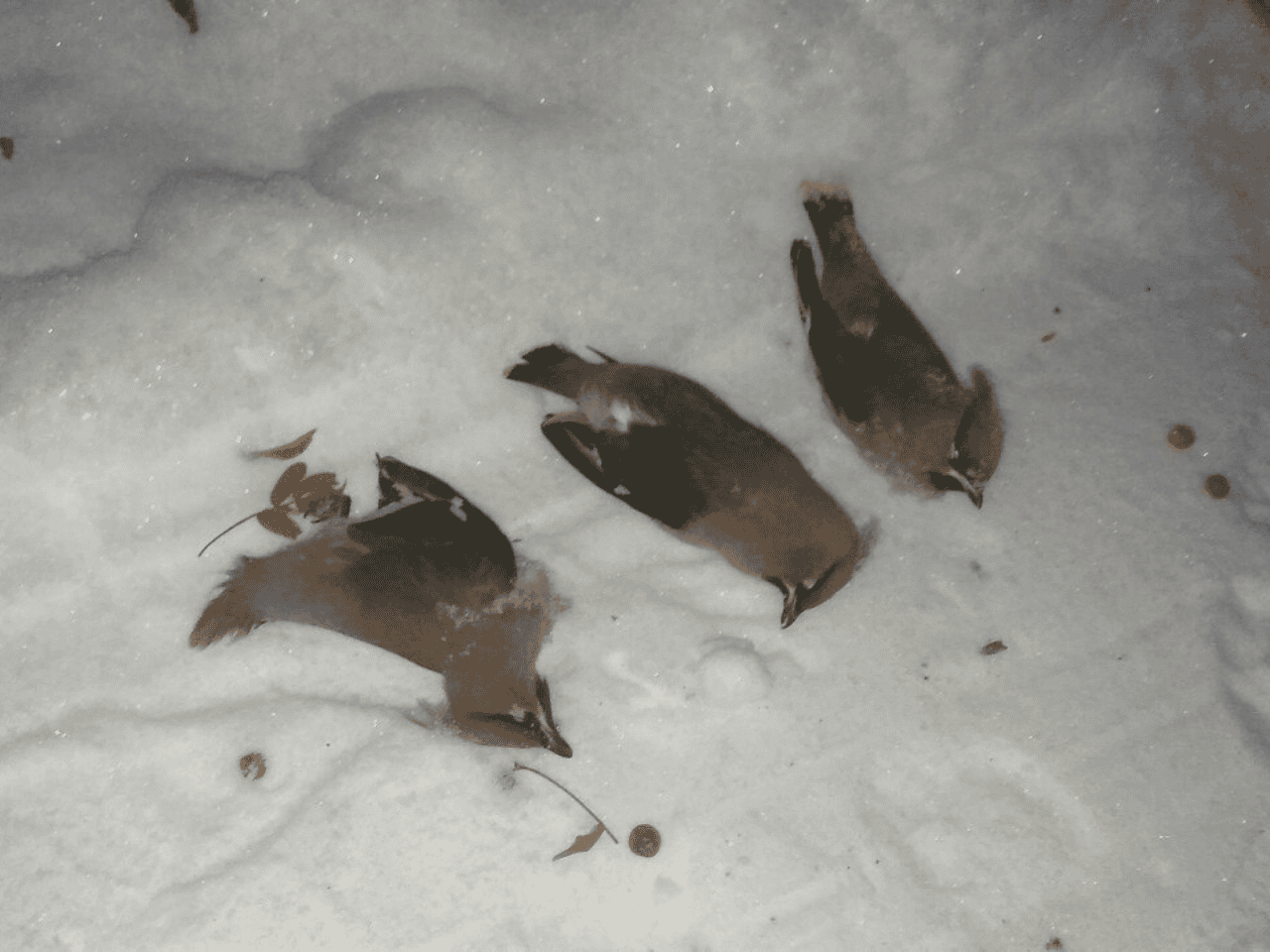
The situation is especially severe in ecosystems with a low food base. For example, during the February winter of 2012 in Western Europe, at least 1,791 wintering birds of 42 species were documented as dead — mostly waders, woodcocks, and thrushes. Of all the carcasses found, 56% died from starvation (8.4% from predators). Many of these birds were emaciated by 30% and in fact simply slowly died of hunger in the cold. And in the USA in 2020, during an abnormally cold autumn, thousands of swallows and cedar waxwings migrating across the deserts of the Southwest died — 80% of the bodies found showed clear signs of severe emaciation.
We are defending the Russian Taiga in our country, in Russia. Unfortunately, there are no major studies on this topic, but Russian ornithologists also assess the situation of wintering birds as critical. According to them, within cities, if birds are supported, survival rises sharply, whereas in the wild (especially in fragmented, shattered ecosystems) birds die out rapidly.
For example, according to ornithologists in Tomsk, in urban conditions (with feeders) the survival of the great tit (Parus major) reaches 70–80%, whereas in natural conditions about half of the birds may not survive the winter. And in some cases only one tit out of ten survives the winter — that is, almost all do not live to spring.

In scientific work by Swedish researchers from 2023 — I think I even wrote about it earlier — it was found that birds with access to feeders do not lower their body temperature as much as those without food, which means they have more strength to fight infections. In another experiment, winter feeding led to female tits maintaining a higher body temperature during frosty nights and surviving better than females without feeders. Studies also note that birds that receive supplementary feeding in the cold season have better health indicators (less stress, a more active immune system) and in the following season may produce more and more viable chicks.
Thus, our all-Russian annual project is an extremely necessary public effort that helps support the immune system of wildlife. And at the same time the иммунитет of our society, uniting people in defense of the real, living world and showing the path — through direct actions — to practical work with wild nature! I am talking about interaction with the living world around us.
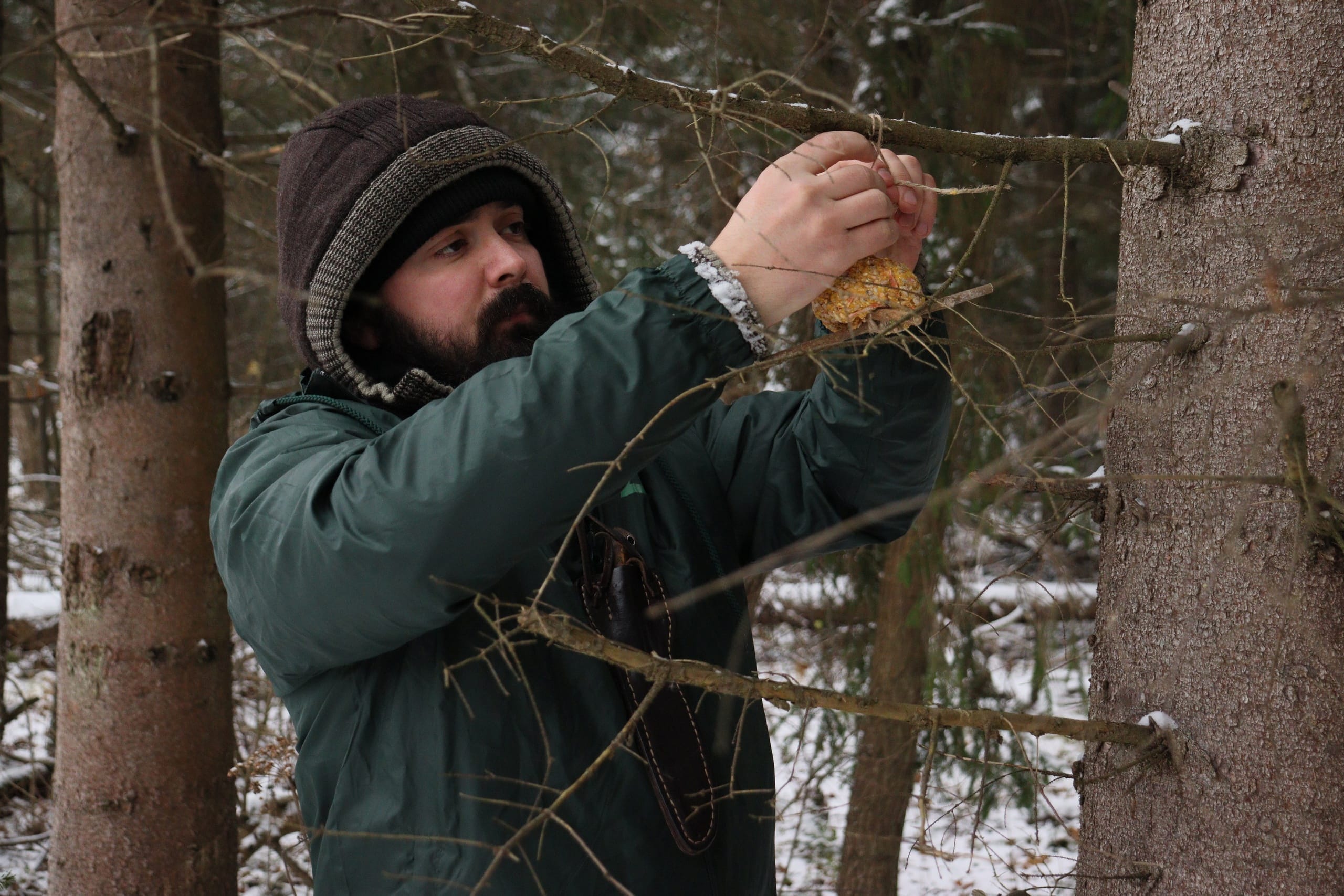
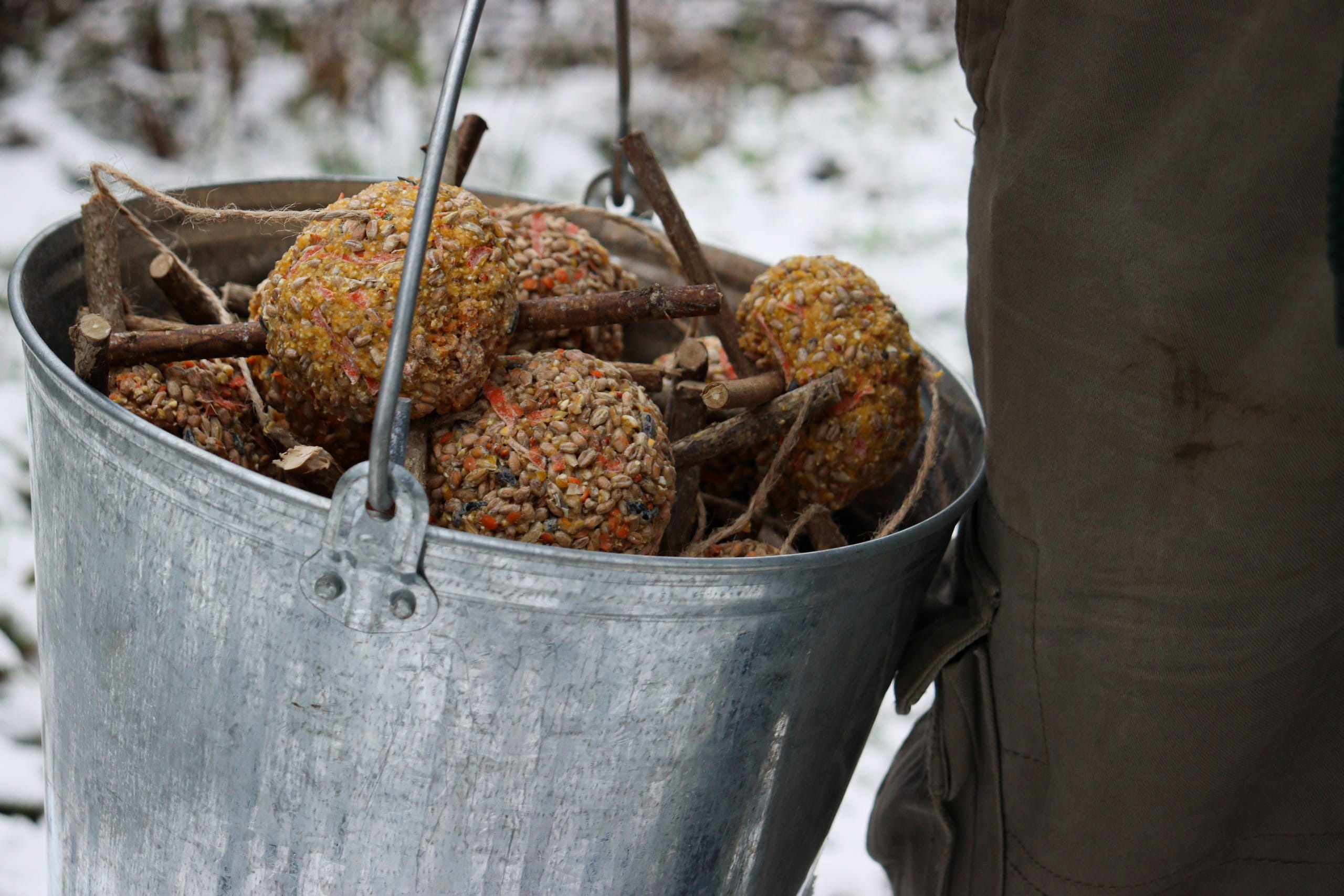
Look! For several years in a row we independently, in our workshop alone, made tens of thousands of feeder-balls over the winter, which we then placed in logging sites, areas affected by forest fires, and other places with pronounced ecosystem degradation.
One ball weighs about 85–90 grams and has an energy value of 530 kcal per 100 g (about 2218 kJ/100 g by our estimates). In their study, scientists estimated the winter daily energy expenditure for the black-capped chickadee mentioned above at ≈65.5 kJ/day. Thus, if all the energy from one feeder-ball went to one bird, it could provide itself with food for about 30 days.
But in real wilderness many birds feed from one feeder, and often it covers only about 25–30% of the daily requirement, without replacing the need for birds to search for food and without making them rely solely on our support. Thus, our help to wintering birds is a safety net — to support them in frosts, not to replace the natural functions of food поиска with artificial dependence on feeders.
We roughly fall into this very range described by scientists in their study, when our work makes it possible to double birds’ winter survival. And then a “chain reaction” of biologically important functions is triggered — functions that we have influenced.
In blue tits or tits during the chick-rearing period, each chick can eat about 100 caterpillars a day, and a brood of 10 chicks — up to a thousand caterpillars. For example, according to scientific studies by the University of Edinburgh, one blue tit brood can eat tens of thousands of caterpillars before fledging. And in scientists’ materials there are data showing that a typical great tit nest is supplied with more than 10,000 caterpillars!
Thus birds maintain balance in the wild, the health of the forest, and heal trees. Massive areas of diseased forest do not appear; pests do not spread, which then does not lead to other diseases among trees, drying out, or large-scale fires. A healthy forest functions properly. But once it loses its natural врачей—birds, ecosystems begin to degrade and then, by a chain reaction, trouble after trouble follows.
That’s all, Allies! You came into the forest — you supported wintering birds. And you yourself became part of living ecosystems, part of vital processes in the biocenoses of the Russian Taiga.
© PAVEL PASHKOV
Support the fight!
The hardest thing in our time is to remain independent from government and business! All activities are carried out independently. Stand with us and support our Mission to protect wildlife.
I want to support!Concept of TFET
The world is going through the sixth mass extinction of species; in just the last 50 years, humans have destroyed about 73% of all animals on the planet. We are experiencing a real environmental collapse on a planetary scale. It is urgently necessary to establish Territories of Full Ecological Tranquility (TFET) — we are trying to achieve a complete overhaul of the existing protected areas system.
Learn moreTake action
Take part in our public project to support wintering birds during the frosts — tens of thousands of people have already stood up to protect
Learn moreShare this material!


